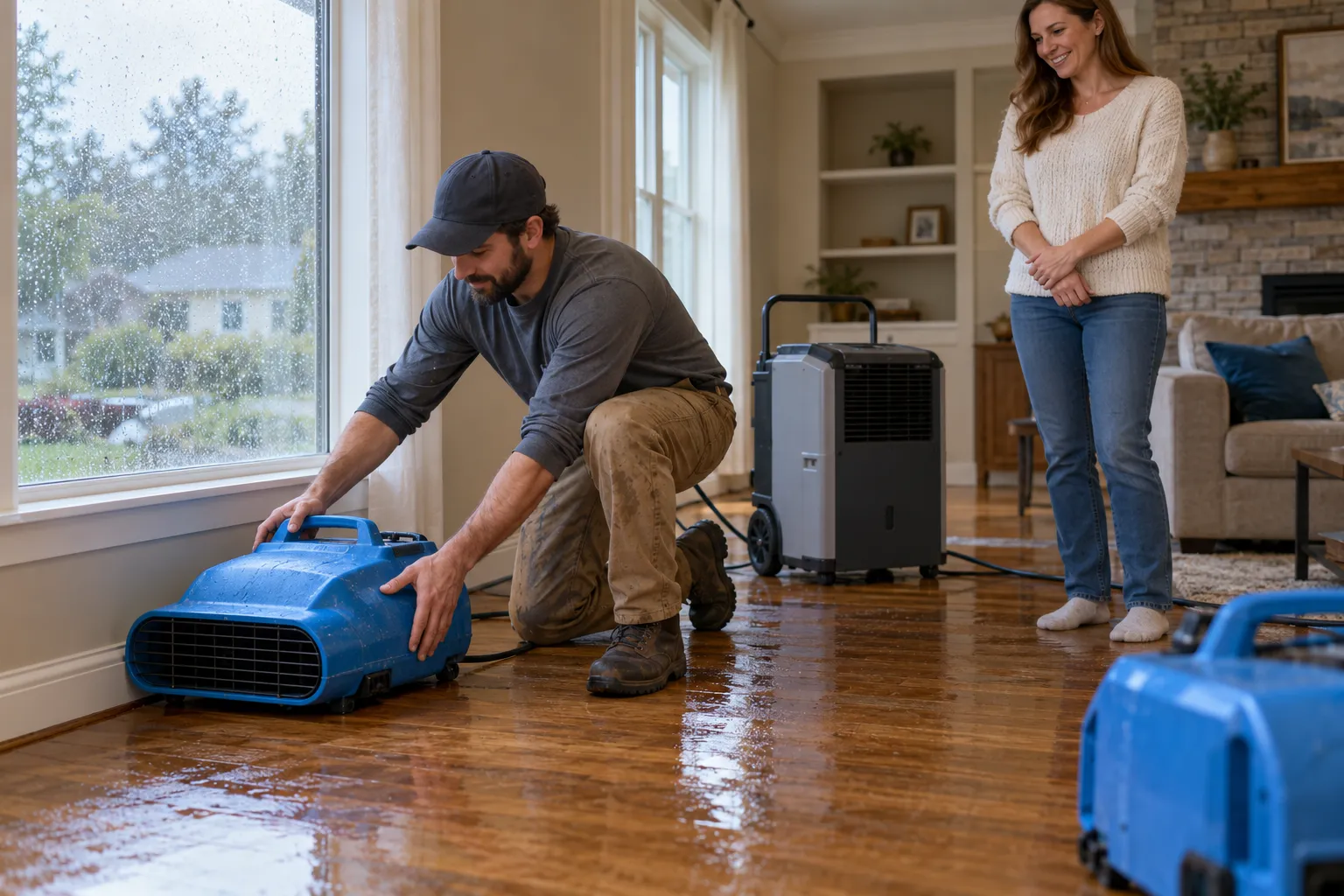
Water Extraction and Structural Drying
Request an estimate today
Say you come home and the floor squishes under your feet. Water is pooled in the hallway, and the baseboards look dark. Extraction is the first job. A local provider uses pumps and vacuums to pull the water out fast.
Drying is the second job, and it matters just as much. Water soaks into wood, drywall and insulation where you cannot see it. Providers use fans, dehumidifiers and moisture meters to dry those hidden spots. Hopefullyimpression Restoration does not do this work. We connect you with independent providers in our network, and you choose what happens next.
Standing Water? Start Here
Say you come home and your shoes splash in the entry. A supply line let go, or the washer hose split. Water is across the floor and still moving.
This page covers the two jobs that come first: water extraction and structural drying. Providers do the work. Hopefullyimpression Restoration is a referral service that connects you with independent local providers.
Stay Safe Before Anything Else
Water and electricity are a risky mix. If water reaches outlets, cords or the panel, stay out of that room. Shut off power to the area only if you can reach the panel while standing on dry ground. If you cannot, ask a licensed electrician or your utility for help.
Then stop the source if you can. A main shutoff valve is often where the water line enters the house.
Why Pulling Water Out Quickly Matters
Water does not stay put. It runs under flooring, wicks up drywall and settles into the framing. In a region with a long wet season, the outdoor air is already damp, so materials hold moisture longer.
Mold can begin to grow within a couple of days when conditions are right. Many providers can respond quickly, but availability varies. Request an estimate and see who is open to the job.
How Water Extraction Works
Extraction means removing the bulk of the water. A provider may use a truck-mounted unit or a portable pump for deep water. Wet vacuums and hand wands handle carpet, tile and hard floors.
They may lift carpet and pull the pad. Furniture gets moved or propped up. Pooled water in a crawl space is often pumped out as well.
Emergency Water Damage Repair vs. Drying
People often search for emergency water damage repair, but repair comes later. Extraction and drying come first. Rebuilding wet drywall before the frame is dry can trap moisture behind new paint.
Think of it as a sequence. Water out, moisture out, then fixes.
How Structural Drying Works
After the puddles are gone, the building is still wet. Providers set up air movers to push dry air across surfaces. Dehumidifiers pull moisture out of the air so it does not settle back in.
Moisture meters and sometimes thermal cameras show where water is hiding. A provider may cut small holes in drywall or pull baseboards so air can reach the cavity inside.
What Gets Opened Up, and Why
Say a wall looks fine but the meter reads high. The provider may suggest removing the bottom strip of drywall. That sounds drastic, but it lets the wall dry and lets them check for mold.
Wet insulation holds water like a sponge, so it is often removed. Ask which materials can be dried in place and which should go.
Crawl Spaces and Older Homes
Wood-frame homes, craftsman houses and many townhomes have crawl spaces or tight cavities. Damp air there can linger. A provider may use extra dehumidifying or a vapor check before calling the job done.
Older homes may have layered floors or plaster, which dry slowly. Expect the provider to explain how that changes the plan.
How Long Does Drying Take?
Most jobs run about three to five days, but it depends. The amount of water, the materials and the weather all play a part. A damp, rainy week slows things down.
The provider should check readings each visit and tell you when the numbers reach a dry target. Do not stop the equipment early.
What You Can Do While You Wait
A few simple steps help while you line up a provider:
- Move small items, rugs and electronics to a dry room.
- Take photos and video of the water and damaged items.
- Open blinds and doors if the weather is dry.
- Keep kids and pets out of wet areas.
- Avoid using a household vacuum on water.
Think About Your Insurance Early
Some policies may cover sudden damage, such as a burst pipe. Others do not. Check your policy and talk to your insurer. Providers can often help document damage for a claim, so keep your photos and any invoices.
Questions to Ask the Provider
Say two providers give you two different plans. That is normal. Compare them with clear questions:
- What equipment will you set up, and for how many days?
- How will you measure that things are dry?
- Which materials may need to be removed?
- Is the quote in writing, and what could change it?
- Will you help with photos and notes for my insurer?
How Hopefullyimpression Restoration Fits In
Here is the honest version. Hopefullyimpression Restoration does not send crews and does not do repairs. We match your request with independent providers in our network. The provider sets the price, the schedule and the work plan.
Options before pressure. You can compare, ask questions and say no. If you want to talk it through, Request a callback to check provider availability.
Ready to Compare Your Options?
Tell us a little about the water and the rooms affected. A local provider can follow up with an estimate. There is no obligation to hire anyone.
What's Included
Pump and vacuum removal
Pumps and wet vacuums pull standing water from floors, carpet and low spots such as crawl spaces.
Moisture mapping
Meters and cameras find hidden wet spots in walls and floors.
Fans and dehumidifiers
Air movers and dehumidifiers dry out framing, subfloors and air over several days.
Progress readings and updates
Providers check moisture levels on each visit and explain when materials have reached a dry target.
What Extraction and Drying Typically Cost
Prices vary by job size, water type and materials. These are typical U.S. ranges, not quotes. Ask each provider for a written quote that lists equipment, days and any removal work.
| Item | Typical range | Notes |
|---|---|---|
| Small water extraction | $250 – $1,000 | One room, shallow water |
| Large or deep extraction | $1,000 – $4,000 | Several rooms or deep water |
| Drying equipment per day | $300 – $600 | Fans and dehumidifiers, set-up included |
| Full structural drying job | $1,200 – $5,000 | Often 3 to 5 days of equipment |
| Wet drywall or insulation removal | $400 – $2,500 | Depends on the area opened |
| Moisture inspection | $150 – $500 | Meters or thermal imaging |
How It Works
Send your request
Share where the water is, how much there is and what rooms are affected.
Get matched
A local provider in our network follows up with questions and an estimate.
Compare your options
Review the plan, equipment, timeline and written quote. Ask anything before you decide.
Provider starts work
If you agree, the provider extracts water, sets up drying and tracks progress.
Why Call Hopefullyimpression Restoration
Honest about who does the work
Providers do the work. We only connect you, and we say so clearly.
Options first
You can compare providers and plans before agreeing to anything.
Plain talk
Steps and terms are explained in everyday words, with no pressure.
Local match
Requests go to independent providers who serve homes in your area.
Other Services
Need water extraction and structural drying in Portland?
Send an estimate request and a provider in our network will follow up. Prefer email? Write to contact@hopefullyimpression.living and tell us what happened.
No obligationWater Extraction and Structural Drying FAQ
How long does structural drying take after a water leak?
Most homes need about three to five days of drying, though it varies. The amount of water, the building materials and damp weather all matter. The provider should check moisture readings each visit.
Can I dry out wet walls and floors myself with fans?
Fans help with small spills, but water often hides inside walls and under flooring. Without meters, it is hard to know when things are dry. A local provider can check for hidden moisture.
Does homeowners insurance pay for water extraction and drying?
Some policies may cover sudden damage, like a burst pipe, but not slow leaks or floods. Check your policy and talk to your insurer. Providers can often help document damage for a claim.
Request a callback
Send an estimate request and a provider in our network will follow up. Prefer email? Write to contact@hopefullyimpression.living and tell us what happened.
No obligation