Water Damage Restoration for Homeowners in Portland
Request an estimate today
Say you come home after a storm and the carpet squishes under your feet. Or a pipe behind a wall has been leaking for days. Water damage restoration is the work of removing that water, drying the structure, cleaning what was touched, and repairing what was lost.
Hopefullyimpression Restoration is a referral service. It does not send crews or do the work. Your request goes to independent providers in our network, and a provider contacts you with a written quote. You compare, ask questions, and choose. This page explains each step, the types of water, typical costs, and how to pick a provider, so you can decide with a clear head.
Say You Come Home to a Wet Floor
Say you come home after a long stretch of rain. The hallway carpet squishes under your shoes. A pipe may have split, or a window may have leaked. Either way, water is now in places it should not be.
Take a breath. This page walks you through what happens next in plain steps. Providers do the work. Hopefullyimpression Restoration only connects you with them.
Who Does What, Plainly
Hopefullyimpression Restoration is a referral service. It does not send crews or perform repairs. Independent local providers do that.
When you request an estimate, your details go to providers in our network. A provider reaches out, asks about the damage, and gives you a written quote. You decide whether to hire them. Options before pressure.
Prefer the phone? Request a callback to check provider availability. Hours vary by provider, so ask when you connect.
What to Do While You Wait
A few safe steps can limit the mess before anyone arrives:
- Stay away from wet outlets and cords. If it is safe to reach the breaker panel, switch off power to the wet area.
- Shut off the water at the main valve if a pipe is the cause.
- Lift small items, rugs, and papers out of the water.
- Take photos and short videos of everything wet.
- Skip the household vacuum on standing water. It is not made for that.
Why Timing Matters With Wet Materials
Water does not stay put. It soaks into drywall, wicks up walls, and slips under flooring. In a rainy region where the air is already damp, things dry slowly on their own.
Say a wood-frame home takes on water in a back bedroom. In a couple of days, the baseboards swell and a musty smell shows up. Mold can start on damp surfaces in that time. Many providers can respond quickly, so it helps to start the conversation early.
What Water Damage Restoration Covers
The work usually moves in stages. Not every job needs every stage.
Removing the Water
Pumps and extractors pull out standing water. Wet carpet, pad, and soaked insulation may be taken out so they do not hold moisture.
Drying the Structure
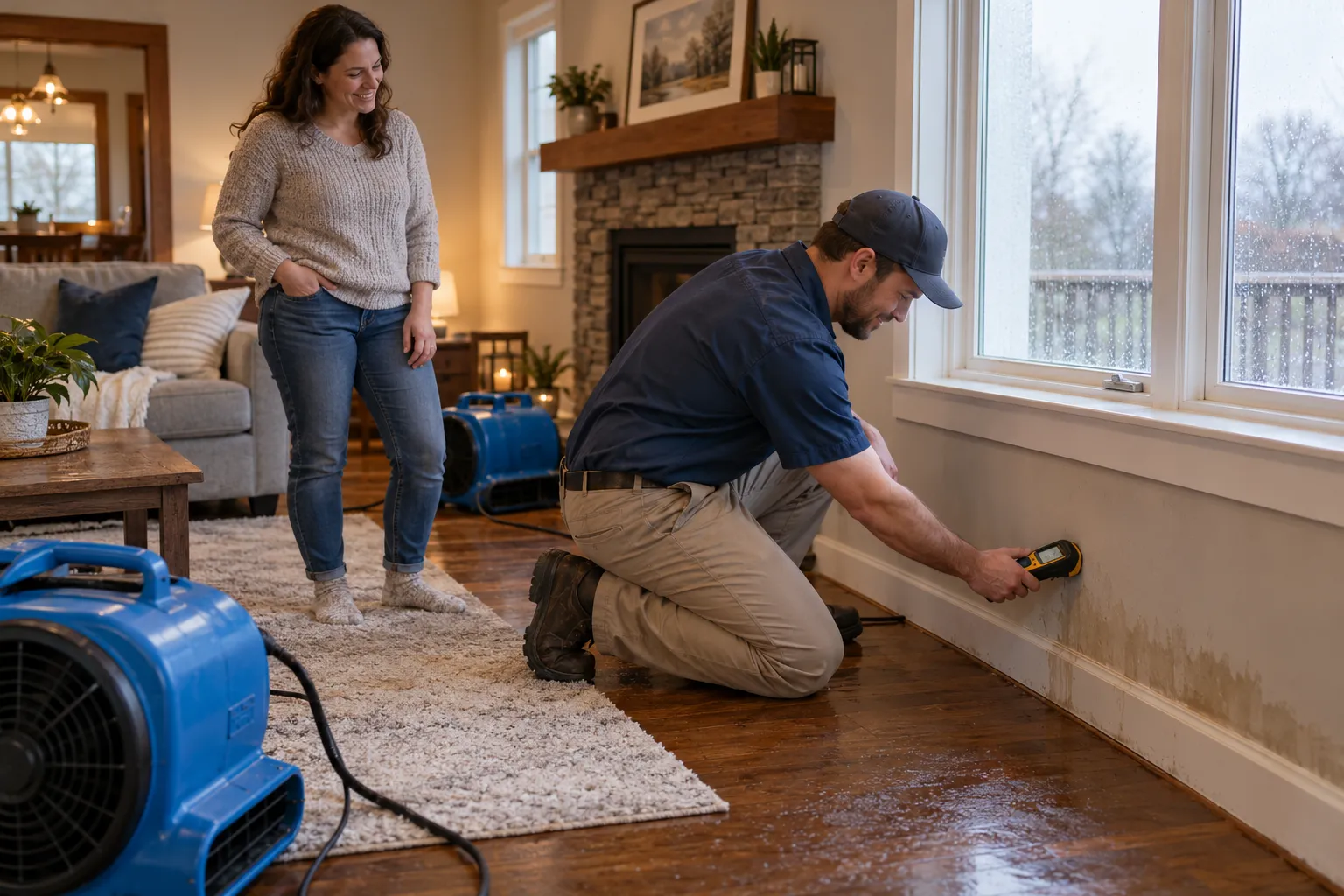
Fans and dehumidifiers dry walls, subfloors, and framing. A provider often uses meters to check moisture levels before calling the job dry.
Cleaning and Sanitizing
Surfaces and belongings touched by water get cleaned. Some jobs also need odor control or antimicrobial treatment.
Repairs and Rebuild
Once everything is dry, damaged drywall, trim, paint, and flooring are replaced. Some providers handle this. Others hand it to a separate contractor.
Types of Water and Why They Matter
Providers sort water into three groups. The group changes the plan.
- Clean water: from a broken supply line or a leaking faucet. It is the simplest to handle.
- Gray water: from a washing machine or dishwasher. It may carry germs, so more care is needed.
- Black water: from sewage backups or rising floodwater. It is unsafe. Keep kids and pets away, and expect porous items to be thrown out.
Clean water can turn into worse water if it sits. That is another reason not to wait long.
Your Options Before Anyone Starts
You have choices. You can request estimates from more than one provider. You can ask what they would do first, how long drying may take, and what is included in the price.
Say two providers give you different plans. One removes more drywall. One dries in place. Ask each to explain why. A good answer points to moisture readings, not guesswork.
Insurance and Your Claim
Some policies may cover sudden damage, such as a burst pipe. Others may not cover floods or slow leaks. Check your policy, and ask your insurer what applies.
Providers can often help document damage for a claim. Your photos, a list of damaged items, and written estimates all help. Keep receipts too.
Choosing a Provider
Before you agree to anything, ask a few simple questions:
- Is the quote in writing, with the scope listed?
- Do they carry the license or insurance your area requires? Ask to see it.
- How will they measure when the home is dry?
- Who handles the rebuild?
Be careful with anyone who asks for the full payment upfront or pushes you to sign on the spot.
Getting Your Home Back to Normal
After drying, the provider checks moisture again. Then comes cleanup and, if needed, repairs. Small jobs may wrap up in a few days. Bigger ones take longer, especially when walls and floors must be rebuilt.
Say a month later you walk down that same hallway. The floor is dry, the air smells fresh, and the walls are painted. That is the goal, and it starts with one clear request.
What's Included
Water Removal
Pumps and extractors pull standing water out, and soaked carpet or pad may be removed so moisture does not linger.
Structural Drying
Fans and dehumidifiers dry walls and subfloors, with moisture meters used to confirm the job is done.
Cleaning and Sanitizing
Surfaces and belongings touched by water are cleaned, and odor or antimicrobial treatment is added when the job needs it.
Repairs and Rebuild
Once the home is dry, damaged drywall, paint, trim, and flooring are replaced by the provider or a separate contractor.
Typical Water Damage Restoration Costs
Prices vary a lot by job size, water type, and materials involved. These are typical U.S. ranges, not quotes. Always get a written estimate that lists the scope before work begins.
| Item | Typical range | Notes |
|---|---|---|
| Small leak cleanup and drying | $400 – $1,500 | One small area, clean water, quick drying |
| Water extraction, one room | $500 – $2,500 | Depends on depth and flooring type |
| Structural drying equipment | $1,000 – $4,000 | Fans and dehumidifiers over several days |
| Drywall and insulation removal | $1,000 – $3,500 | Rises with wall area and hidden damage |
| Mold testing and treatment | $500 – $6,000 | Varies by size and where it has spread |
| Flooring and rebuild | $1,500 – $10,000 | Carpet costs less than hardwood or tile |
How It Works
Request an Estimate
Tell us what happened and where the water is. It takes a few minutes.
A Provider Contacts You
An independent local provider reaches out to ask questions and learn about the damage.
Compare Your Options
Review the written quote, the plan, and the timeline. Ask anything that feels unclear.
Provider Starts the Work
If you hire a provider, they handle removal, drying, cleaning, and any repairs.
Why Call Hopefullyimpression Restoration
Plain Process
We explain each step in everyday words, so you know what a provider will do before any work begins.
Local Providers
Your request goes to independent providers near you who know wet-season homes and crawl spaces.
Written Quotes
Providers give you a written quote, so you can compare scope and price at your own pace.
Your Choice
There is no obligation. You decide whether to hire a provider, and when.
Other Services
Need water damage restoration in Portland?
Send an estimate request and a provider in our network will follow up. Prefer email? Write to contact@hopefullyimpression.living and tell us what happened.
No obligationWater Damage Restoration FAQ
What does a water damage restoration provider actually do?
A provider removes standing water, dries walls and floors with fans and dehumidifiers, cleans affected areas, and may repair what was damaged. The exact steps depend on the water type and how far it spread.
How fast does mold start growing after a leak?
Mold can begin growing on damp materials within a couple of days, especially in humid, rainy weather. Drying the area quickly lowers the risk, so it helps to contact a provider early.
Does homeowners insurance cover water damage?
Some policies may cover sudden damage like a burst pipe, but flooding and slow leaks are often treated differently. Check your policy, and ask your insurer what applies to your situation.
Request a callback
Send an estimate request and a provider in our network will follow up. Prefer email? Write to contact@hopefullyimpression.living and tell us what happened.
No obligation